2026 is all about moving from talk (chatbots) to action (agents)
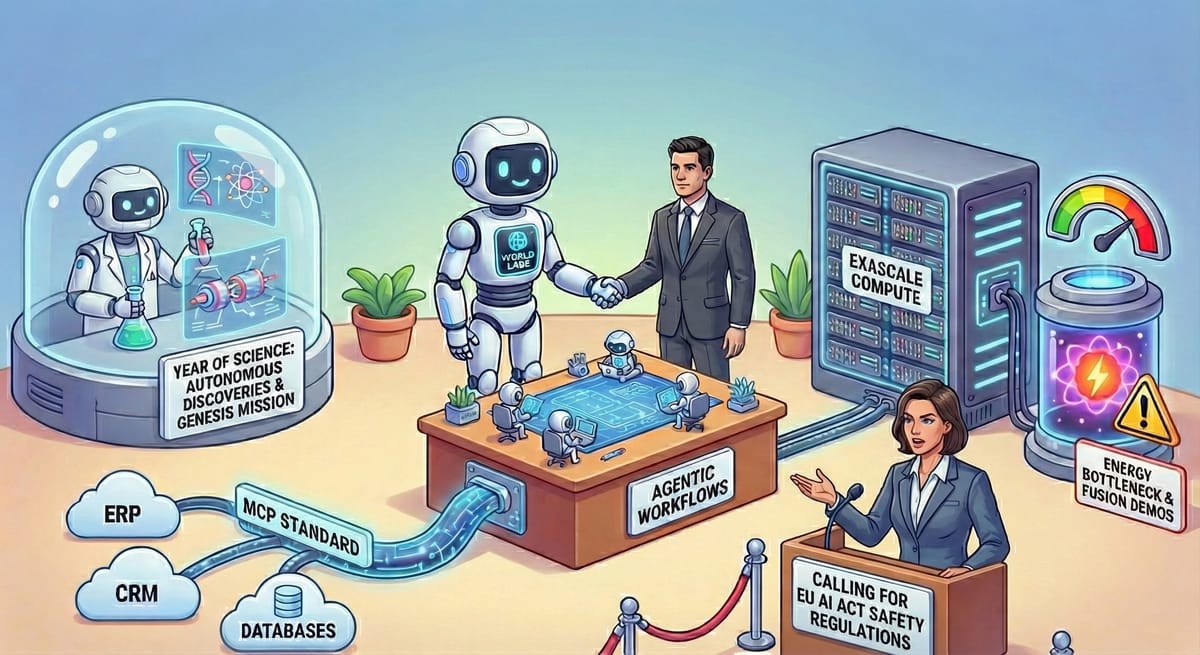
For the last two years (2023-2025), we’ve been living in a "cycle of experimentation." We've all seen the demos, the chat interfaces, and the endless pilots. But in my work with various clients and teams, the conversation is shifting rapidly. The focus is no longer on "look what this model can say" (fluency); it is now squarely on "look what this system can do" (utility).
I’ve been reviewing the landscape for 2026, and the data points to a clear transition. We are moving from a metric of tokens per second to a metric of tasks completed per hour.
Here is a detailed look at the five major shifts coming down the pipe and what they mean for how we build and operate our companies.
1. The Shift to Agentic Workflows
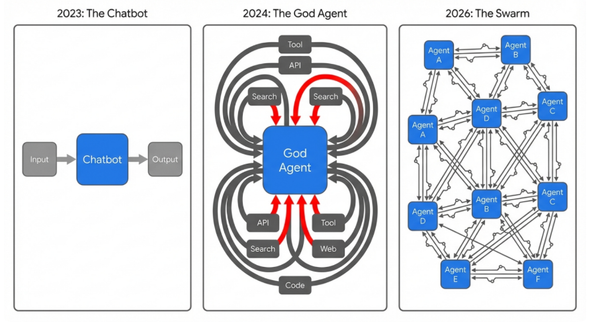
The most immediate change for us is the move from chatbots to agents.
Andrew Ng has been championing the idea of "agentic workflows," and it’s a concept we need to internalize immediately. The value isn't just in having a smarter model; it’s in how that model is instructed to work. We are seeing a move toward systems that don't just answer questions but actively use "design patterns" to execute complex jobs.
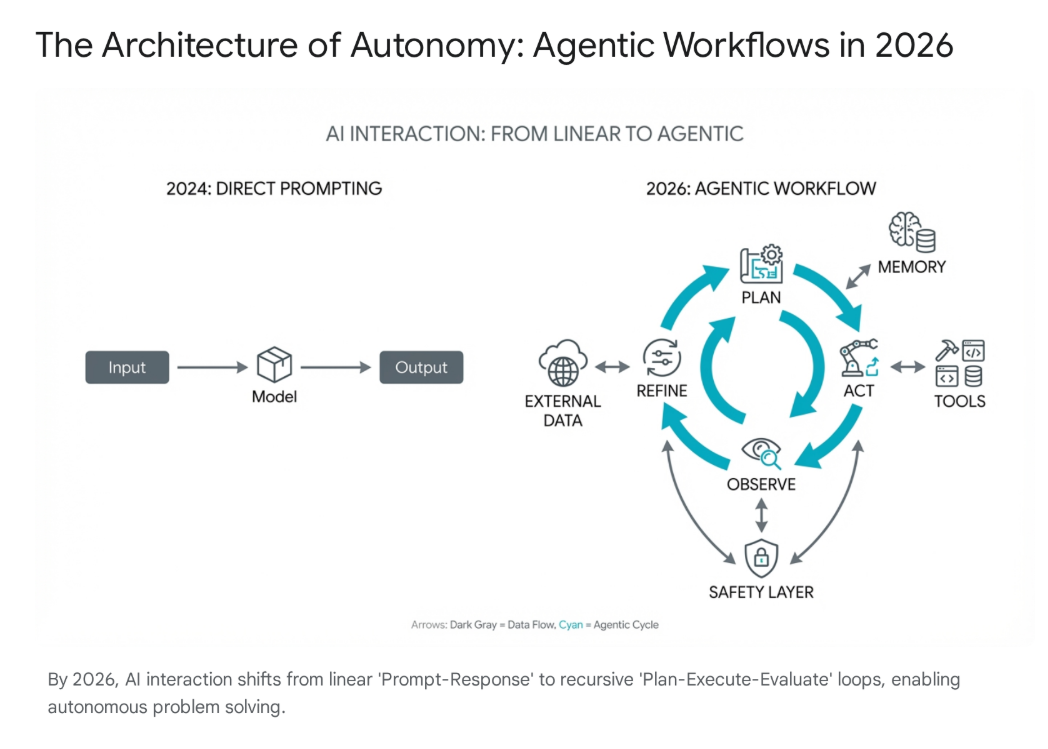
Specifically, we are seeing four patterns emerge that will define software in 2026:
- Reflection: Agents that don't just spit out the first answer. They generate a draft, critique their own work (e.g., "Is this on brand?", "Is this code secure?"), and then rewrite it before a human ever sees it. This "inner monologue" significantly reduces error rates.
- Tool Use: Agents that aren't "brains in a jar." They can access your calendar, query the CRM, send emails, and execute Python code directly to solve problems.
- Planning: The ability to take a vague goal ("Launch a Q3 campaign") and break it down into a 50-step plan, identifying dependencies along the way.
- Multi-Agent Collaboration: This is the force multiplier. Imagine a "Manager" agent that coordinates a "Copywriter" agent and a "Compliance" agent to deliver a finished product.
The "So What":
For our sales and marketing engines, this changes the game. We aren't just using AI to write an email anymore. We can build a system where one agent drafts the campaign, a second agent critiques it against our brand guidelines, and a third handles the actual sending and CRM logging.
- Recommendation: Stop looking for the "perfect" model to solve everything. Start building workflows where specialized agents hand off tasks to one another.
2. The "USB-C" of AI: Model Context Protocol (MCP)
One of the biggest headaches we’ve faced is getting these AI models to talk to our actual business data—our CRMs, our ERPs, and our internal databases. Historically, this meant writing custom, brittle code for every single connection.
The industry is coalescing around the Model Context Protocol (MCP). Think of this like a USB-C port for AI. It’s a standard way for AI agents to plug into your existing software stack without needing custom integrations every time.
Forrester predicts that by 2026, 30% of enterprise software vendors will support this standard. This means "AI agency" becomes a standard feature, not a custom project. An agent from Anthropic or OpenAI will be able to plug directly into an SAP or Oracle system to read inventory levels or process invoices, treating your enterprise software as a tool it can wield.
The "So What":
If you are a CIO or technical leader, this is your roadmap. We need to ensure our internal data is ready to be accessed by these agents.
- Recommendation: When evaluating new tools or building internal tech, ask about MCP support. It will likely become the standard for how we connect our "digital workforce" to our data.
3. The Talent Shift: From Hourglass to Diamond
We are also seeing a profound shift in talent strategy. The market is moving toward an "hourglass" shape, squeezing the middle, but creating a "diamond" of opportunity for those who adapt.
- The Squeeze: The "waist" of the hourglass—mid-level tasks like summarizing reports, basic data analysis, and routine coordination—is exactly what these new agentic systems excel at.
- The Orchestrators: On one end, we see the rise of junior "AI-Natives." These aren't just fresh grads; they are effectively "Agent Orchestrators." Their skill isn't doing the rote work; it's managing the fleet of AI agents that do the work.
- The Strategists: On the other end, deep strategists who understand the "why" become even more valuable. They set the guardrails and goals for the systems.
The World Economic Forum estimates that while 85 million roles may be displaced, 97 million new ones will be created—but the skills required are vastly different. We are facing a "reskilling emergency," not a job apocalypse.
The "So What":
The "middle" is getting squeezed. The tasks typically done by mid-level managers are being automated.
- Recommendation: We should look at our hiring plans. We need to identify and train our "Orchestrators"—the people who can manage digital workers—and double down on our high-level strategists.
4. Intelligence Enters the Physical World (Embodied AI)
While 2025 was the year of video models, 2026 is shaping up to be the year of Embodied AI—where the "brain" of the model meets the "body" of the robot.
We are seeing breakthroughs from groups like Google DeepMind (with their Gemini Robotics line) and Fei-Fei Li’s World Labs. They are moving away from rigid, pre-programmed robots to systems that use Vision-Language-Action (VLA) models. This allows robots to "think before they act," simulating a movement in their head to ensure safety before executing it.
The "So What":
This isn't just about factory floors anymore. We are seeing early pilots for "spatial intelligence" in warehouses and logistics that can handle messy, unstructured environments.
- Recommendation: If your business touches logistics or physical operations, it’s time to watch companies like Tesla (Optimus) and Figure.ai. The cost of physical labor automation is about to drop significantly.
5. The Hidden Revolution: The Year of Science
Finally, while we focus on business execution, a massive shift is happening in the lab. OpenAI has explicitly branded 2026 as the "Year of Science."
We are moving beyond models that just chat. We are entering an era of "reasoning engines" capable of solving PhD-level problems. A prime example is Isomorphic Labs (led by Demis Hassabis), which is using tools like AlphaProteo to design novel biological proteins rather than just predicting existing ones. This is the "AlphaFold moment" applied to the entirety of biology and physics.
The "So What":
The "IQ" of the tools available to us is about to jump significantly. This moves AI from a "dialogue box" to a true research partner that can help us solve complex R&D problems.
Summary: The Macro Picture
Underpinning all of this is a massive change in the "Iron Backbone" of our industry:
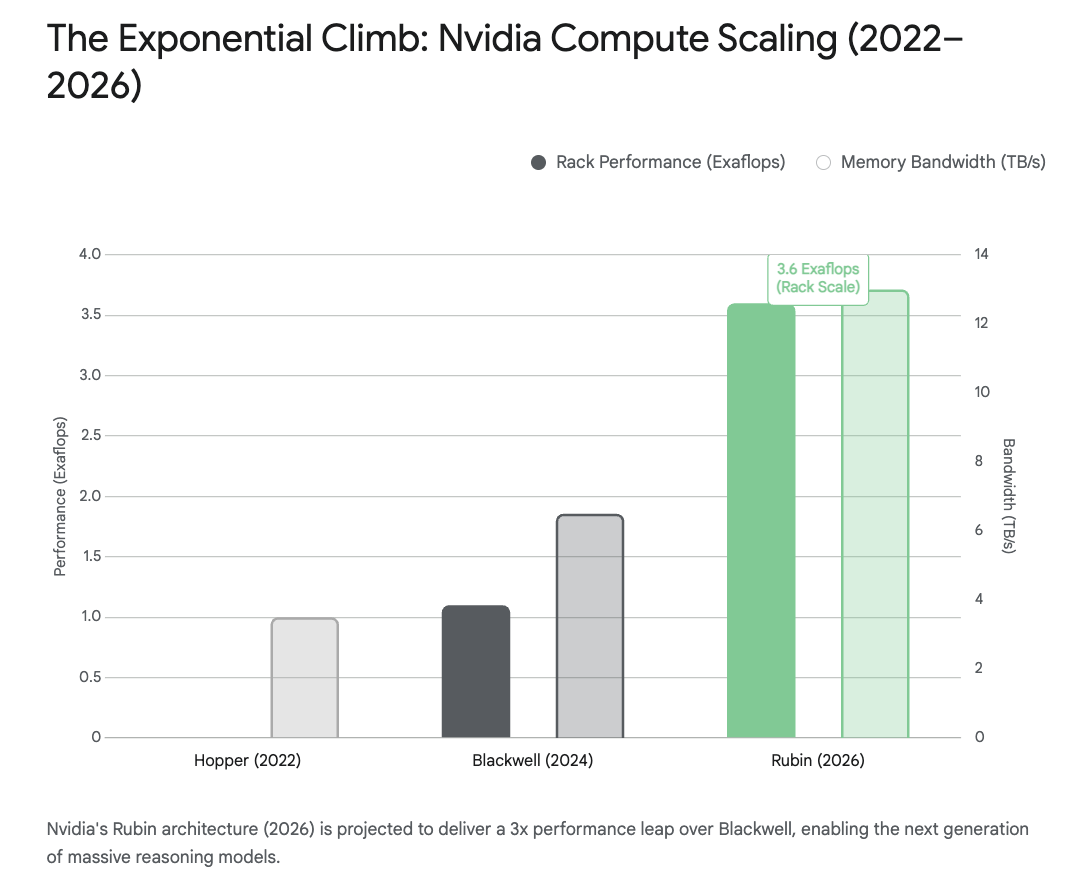
- Compute: Nvidia’s upcoming Rubin architecture is pushing compute density to exascale levels (3.6 exaflops per rack), but energy is the new bottleneck.
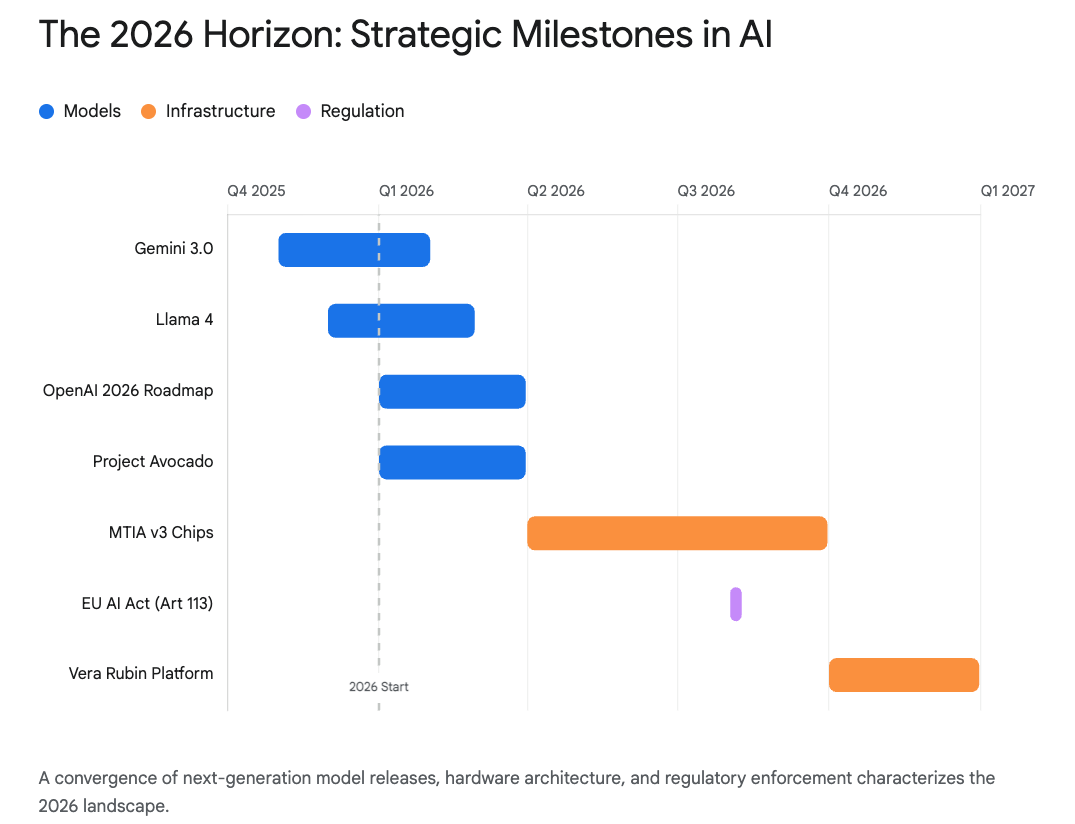
- Regulation: The EU AI Act comes into full force in August 2026. If you operate in Europe, compliance is no longer optional—it’s a gatekeeper.
The companies that win in 2026 won't necessarily have the biggest models. They will be the ones that build the best processes to harness them—connecting the "brains" (agents) to the "body" (MCP and tools) with the right "nervous system" (Orchestrators).
Let’s look at our current go-to-market systems. Are we building for a chatbot world, or are we ready for agents?
Should be a heck of a ride.
Troy