Advanced signals intelligence (SigInt)

For years, we’ve all relied on demographic triangulation—building lists based on Job Title, Company Size, and Location. But lately, I’m seeing diminishing returns with this approach. The problem is readiness. Just because a prospect matches your Ideal Customer Profile (ICP) on paper doesn't mean they are in-market. They might be perfectly happy with their current stack or stuck in a budget freeze. When we hit them cold, we’re doing "interruptive selling," and the conversion rates are plummeting.
What we are shifting toward at Productive AI—and what I recommend you look at—is Psychographic Sourcing (Signal Intelligence). Instead of asking "who is the lead?", we need to ask "what is the lead experiencing right now?"
By analyzing unstructured content (posts and comments), we can detect frustration, urgency, and technical deadlock the moment it happens. Here is the technical architecture and operational framework we can use.
1. The Search Architecture: Native vs. Sales Navigator
One of the biggest misconceptions I see is that LinkedIn Sales Navigator is universally superior for prospecting. It’s not. My analysis shows a split architecture where you actually need both engines for different reasons.
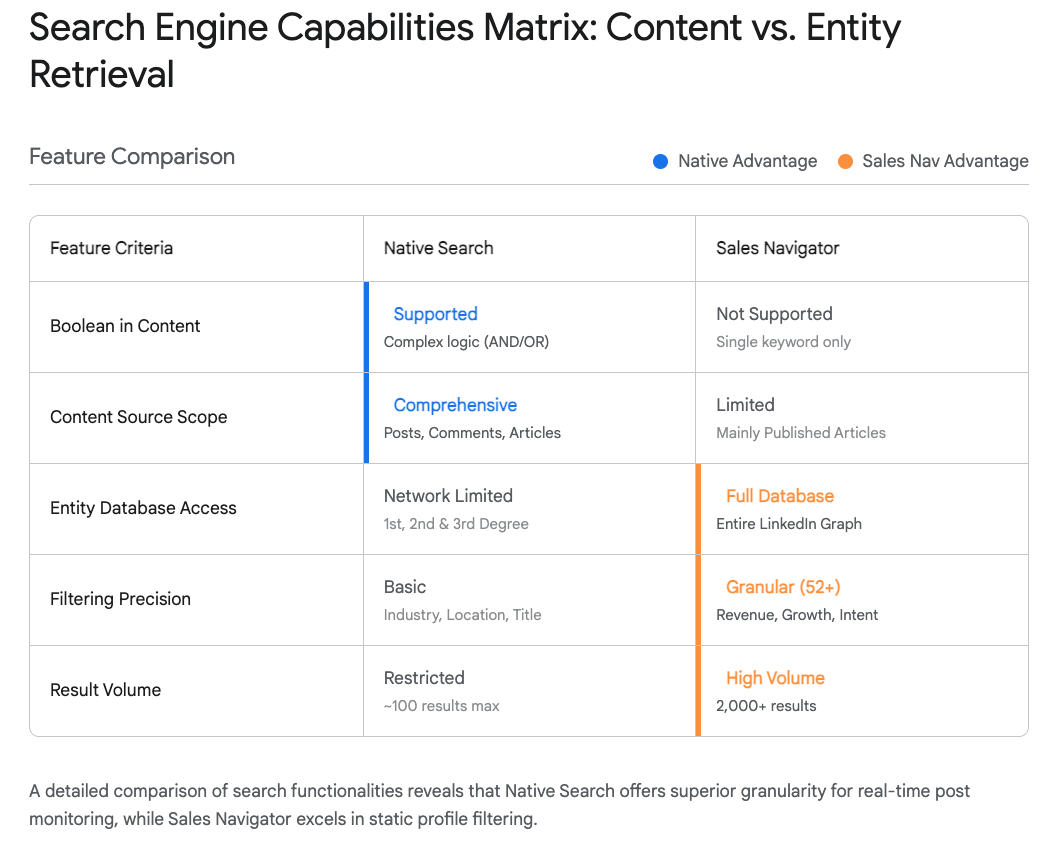
Native Search (The Content Engine)
I treat the native search bar as my primary "listening device."
- Why use it: It scans the full text of posts and comments, which Sales Nav struggles with.
- The Edge: It supports robust complex Boolean logic (AND, OR, NOT) within the content body and allows for exact phrase matching.
- Critical Feature: It offers granular time window sorting (Past 24 Hours) and, with some URL tweaks I’ll detail below, allows us to filter by the hour.
Sales Navigator (The Entity Database)
I view Sales Nav as the "verification engine."
- Why use it: It’s designed to find people, not conversations.
- The Flaw: The "Posted Content Keywords" filter is architecturally weak. It doesn't support complex Boolean strings effectively and often filters out the raw, high-intent posts we need.
- The Edge: It is unmatched for vetting the author (e.g., ensuring the person complaining about a competitor is actually a VP at a target account).
Recommended Workflow:
Use Native Search to find the pain (the signal). Then, switch to Sales Navigator to vet the person (the ICP fit).
2. Boolean Semantics: The Syntax of Intent
Effective listening isn't just keyword matching; it's predicting the linguistic patterns users employ when they are frustrated. We categorize these into three Tiers of Intent:
- Tier 1: Direct Help (Highest Intent)
- What we see: Bottom-of-funnel leads actively asking for vendors.
- Logic:
("recommendation for" OR "alternatives to") AND ("CRM" OR "HubSpot")
- Tier 2: Frustration Signals (Medium-High Intent)
- What we see: "Problem Aware" users venting. This is often the best disruption point.
- Logic:
("frustrated with" OR "hate using") AND ("Salesforce" OR "Legacy Tool")
- Tier 3: Technical Friction (Medium Intent)
- What we see: Users hitting walls, which often precedes churn.
- Logic:
("how do I" OR "integration error") AND ("API" OR "Connect")
Noise Reduction:
To make this usable for your teams, you have to strip out the noise. I always advise aggressively excluding recruiters and sales pitches:
NOT "hiring" NOT "job" NOT "webinar" NOT "link in comments"
3. The Speed Advantage
Speed is where I see teams win or lose. Responding to a recommendation request 48 hours later is usually a waste of time.
- Standard Protocol: We set the Native Search "Date Posted" filter to "Past 24 Hours."
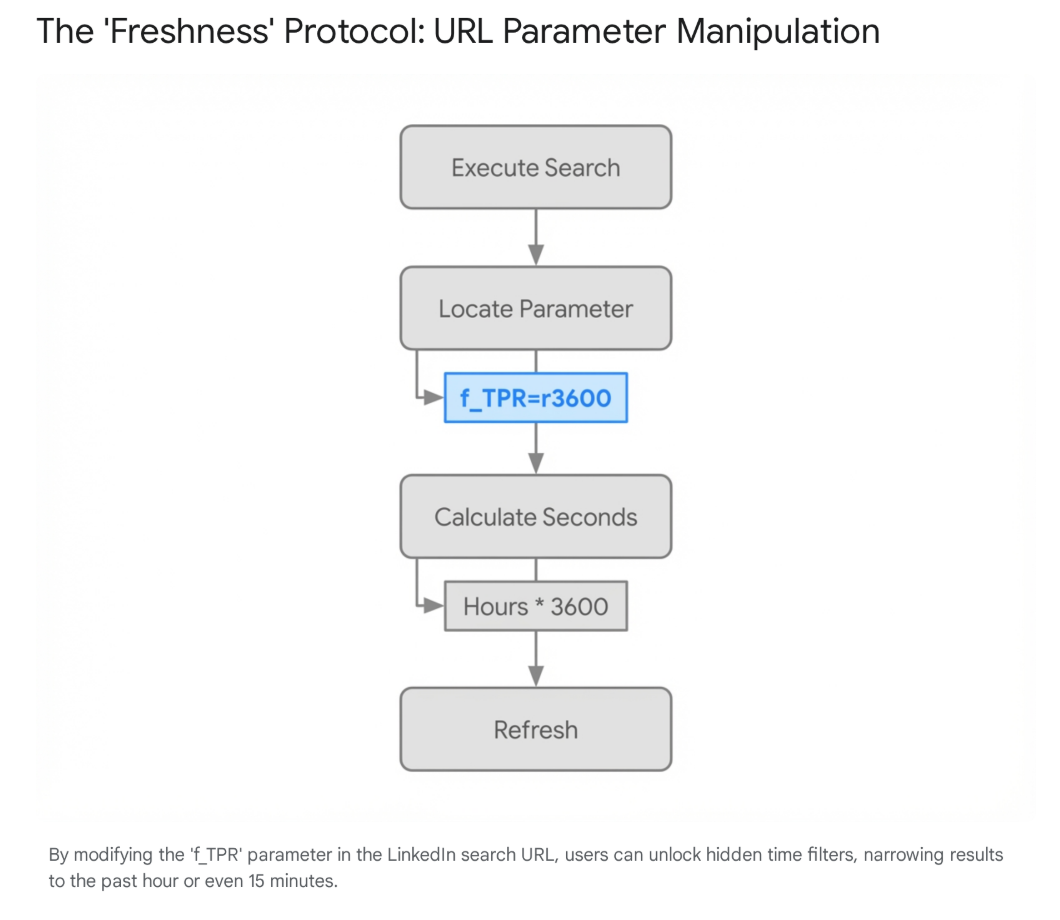
- Advanced Protocol (URL Manipulation): When we need to intercept a crisis (like a competitor outage), we modify the
f_TPR(Time Posted Range) parameter in the URL directly.f_TPR=r86400: Past 24 hours.f_TPR=r3600: Past 1 Hour.f_TPR=r900: Past 15 Minutes.
This allows your GTM team to operate a "Real-Time Feed," engaging prospects while the pain is still acute.
4. Operational Framework: The "Social Signal" Loop
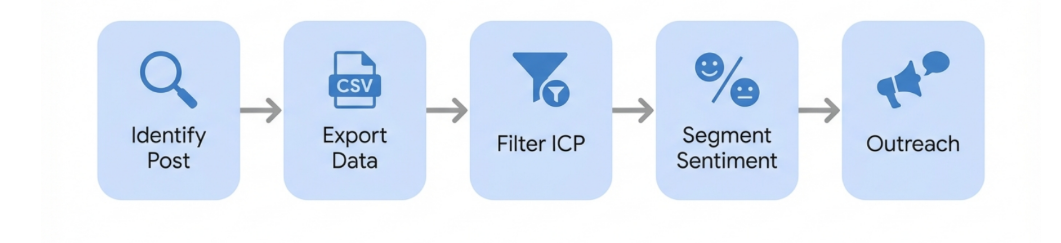
If you want to operationalize this, here is the daily workflow I recommend for your teams:
- Discovery (Native Search): Execute pre-architected Boolean strings targeting specific Competitor Displacement or Workflow Gaps.
- Enrichment (Sales Navigator): Cross-reference the author of a high-intent post in Sales Navigator. Verify they have decision-making power.
- Engagement:
- The "Honey Pot" Strategy: Look at the comments on viral industry posts. The original poster is the primary user, but the 50 people commenting "Me too" are your pre-qualified secondary leads.
- Contextual Outreach: Don't send a generic pitch. Reference the specific frustration they posted about.
Summary
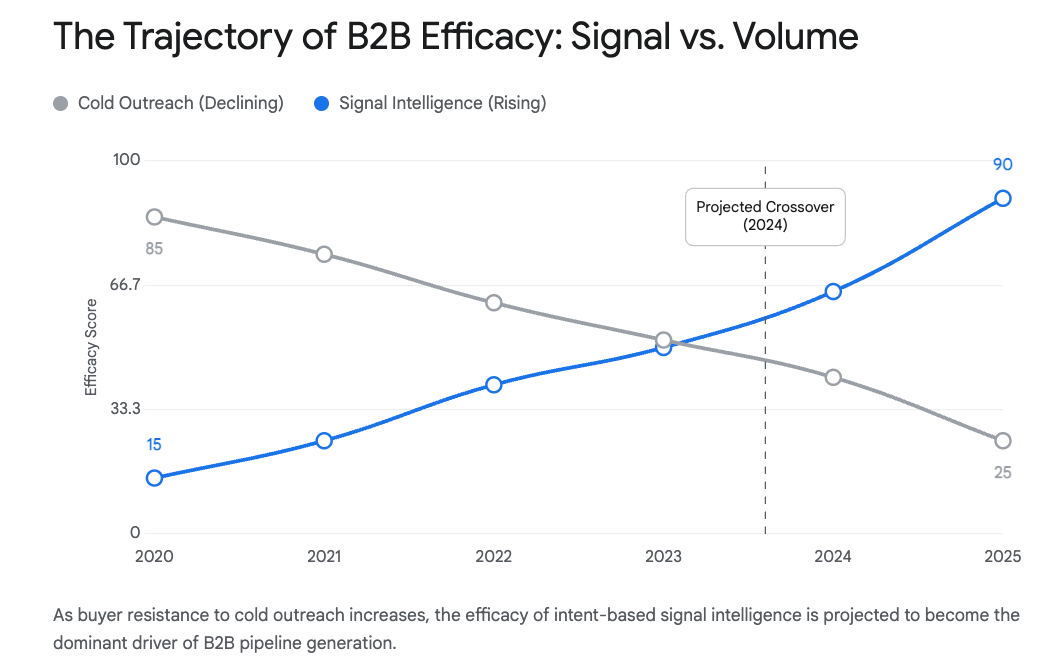
The future of lead generation is about timing, not volume. By mastering the differences between LinkedIn’s search engines and listening for the syntax of intent, we can shift our sales motion from interrupting satisfied non-customers to relieving frustration from real prospects.
Let me know if any of this works for your team,
Troy