Deep Research is a superpower nobody is using enough of
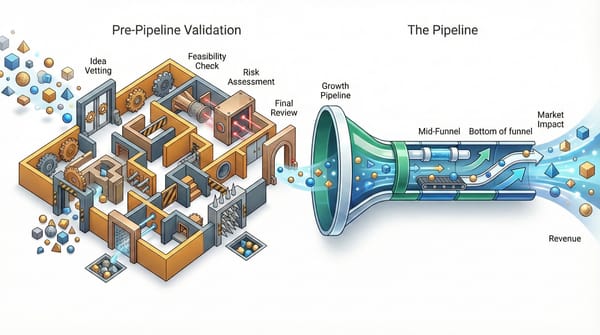
For the last decade, the primary constraint on innovation and the dominant question in our boardrooms was technical feasibility: "Can we build it?" Today, that question is obsolete. With natural language becoming the new programming language, we can build almost anything in a weekend. The existential question for us now is, "Should we build it?"
The risk profile for startups has moved violently and quickly from technical feasibility to market desirability. The easier it is to build, the higher the risk of falling into the "tech-push trap"—building sophisticated "ghost towns" that work perfectly but serve no one.
In my work with various AI companies, I’m seeing that traditional market research is simply too slow for this new reality.
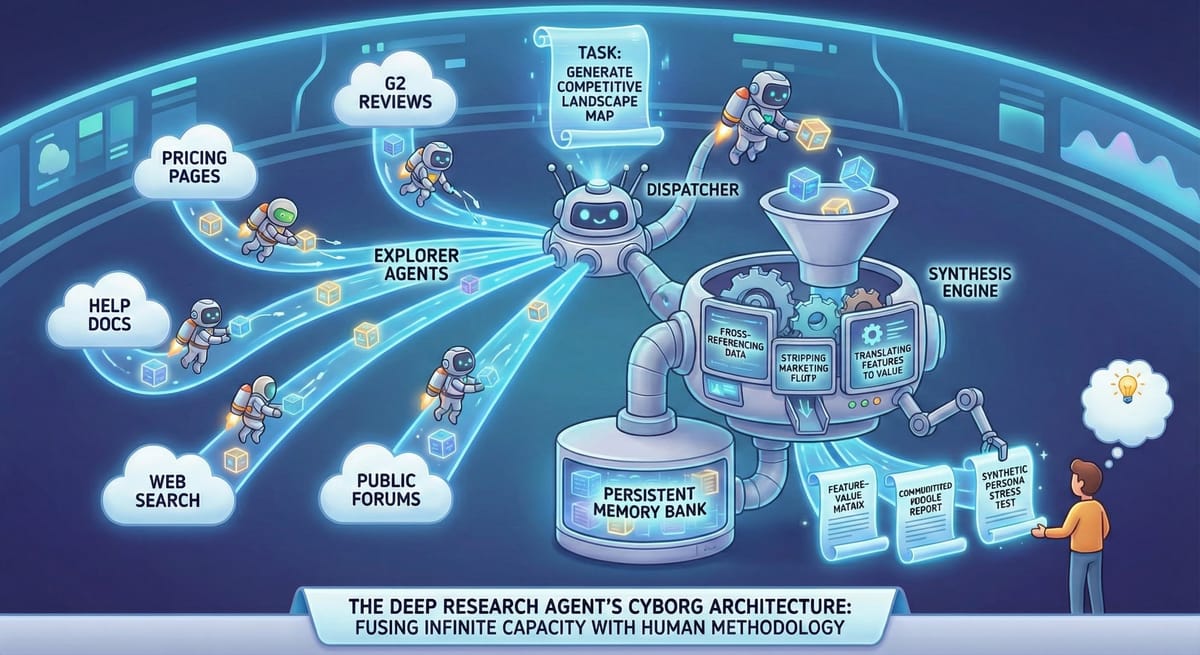
But there is a new approach emerging. This isn't about hiring a massive department of junior analysts or outsourcing to an agency. It’s about fusing the best proprietary human methodologies with the infinite work capacity of agentic AI.
The Unsung Hero: Deep Research Agents
Before we look at the team composition, I need to call out the specific technology that makes this possible. It is not standard generative AI. The unsung hero here—a superpower that surprisingly few teams are using to its full potential—is Deep Research (available via tools like Google Gemini Deep Research Ultra or ChatGPT Pro Deep Research or Perplexity Pro Deep Research.)
Most executives are still treating AI like a chatbot: asking a quick question and getting a 30-second summary. Deep Research agents are different. They are autonomous investigators capable of "thinking" for extended periods, browsing hundreds of sources, cross-referencing contradictory data, and maintaining a persistent memory of your project. They don't just summarize; they synthesize.
This capability is the backbone of this approach. It should be used extensively and often—supporting every single process listed below to give you an unfair information advantage.
Pro-Tip: Build Your Own Advisory Board
You don't have to limit yourself to the experts I list below. One of the most powerful workflows available today is to simply task a Deep Research agent to "Generate a comprehensive implementation guide on the methodology of [Your Favorite Expert]." Once the agent produces that deep-dive report, you can feed it back into your daily chat assistant and say, "Help me solve X problem using this specific methodology as your primary constraint." It effectively lets you simulate a consultation with any thought leader on the planet, grounded in their actual written work rather than generic advice.
Here is the "Dream Team" framework we are exploring, which combines four world-class human experts with these Deep Research agents to get to the truth faster.
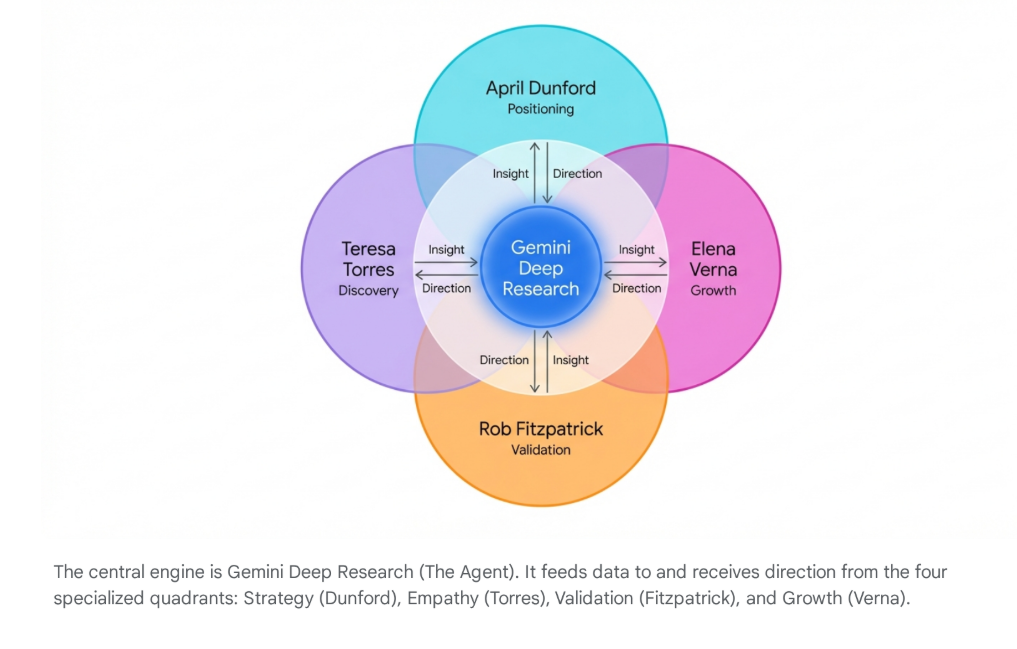
1. The Strategist: April Dunford + Agentic Analysis
Many of us know April Dunford’s work on "Contextual Positioning." She teaches us that customers don't buy "AI" or "technological features"; they buy a solution to a specific painful outcome. Usually, your biggest competitor isn't another AI startup—it's Excel, an intern, or simply "doing nothing."
How Deep Research changes this:
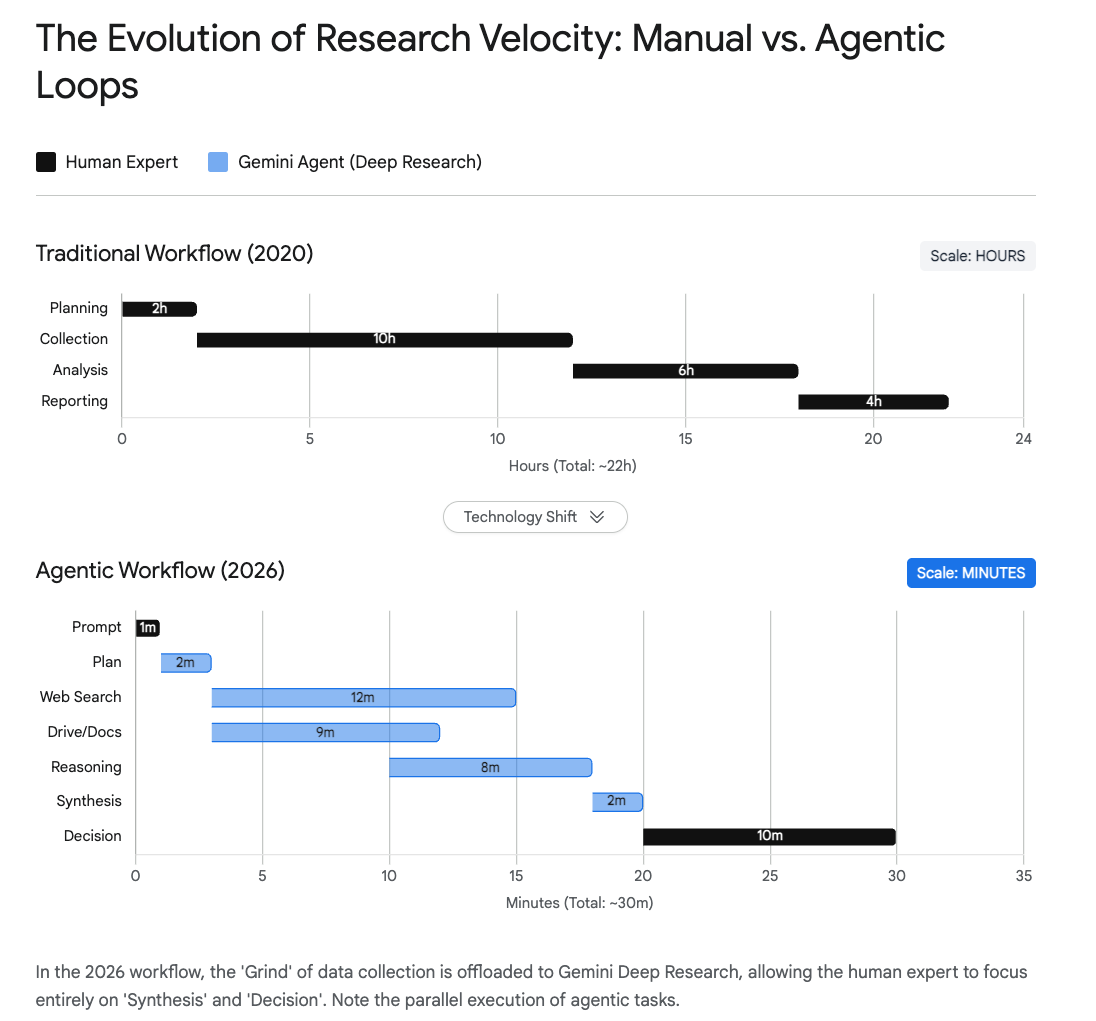
Traditionally, mapping this competitive landscape required weeks of manual grunt work—reading G2 reviews, scouring pricing pages, and analyzing help docs.
Now, we can task a Deep Research agent to perform a "Jobs-to-be-Done" sweep. We can ask it to act as a procurement manager and map the entire landscape—including non-tech "status quo" alternatives—in under an hour.
- The Feature-Value Matrix: The agent can digest documentation from the top five competitors and produce a matrix that strips away marketing fluff. It translates "We use an LLM" into the actual value: "Automates text entry."
- The "Commoditized Middle" Report: We can identify exactly which features are now just table stakes. This gives your human strategist the raw data to find the "white space" and craft a narrative that positions you against the outcome, not just the technology.
2. The Empath: Teresa Torres + Synthetic Prep
Teresa Torres is the authority on Continuous Discovery—the discipline of talking to customers every week to test assumptions. But in a fast-moving AI startup, the operational overhead of scheduling, transcribing, and synthesizing these conversations often becomes a bottleneck.
How Deep Research changes this:
We can now use Deep Research agents to "pre-game" our interviews and act as a live partner.
The Synthetic Stress Test: Before talking to a human, run your interview questions past a synthetic persona generated by the agent. If the AI answers with generic enthusiasm ("I'd definitely buy that!"), you know your question is too soft. The AI forces you to rewrite your script to dig for specific past behaviors, clearing the fluff so your human conversations are deeper.
3. The Skeptic: Rob Fitzpatrick + Commitment Audits
Rob Fitzpatrick (author of The Mom Test) taught us that everyone lies to founders to be polite. They say, "That's a great idea!" when they have no intention of buying. In the age of polite, helpful LLMs, this "false positive" problem is even worse.
How Deep Research changes this:
Deep Research agents are excellent at forensic audits. We can task them to look for commitment, not just sentiment.
The Due Diligence Run: If a potential customer says they have a "huge problem" with X, the agent can autonomously browse the web to check their public footprint. Have they hired for this role? Have they complained about it in forums? Have they bought other tools to try and fix it? If the answer is no, they are likely failing the Mom Test.
4. The Growth Architect: Elena Verna + Channel Simulation
Elena Verna argues that "Product-Market Fit" is often a lagging indicator. The real battle is "Model-Market Fit"—aligning your pricing and distribution with how the market actually buys. This is critical because AI is actively dismantling traditional channels like SEO.
How Deep Research changes this:
We can move from "asking" to "testing" distribution loops before we launch.
Agentic Simulation: We can task a Deep Research agent to analyze the "Distribution Ecology" of a target market—identifying if they buy via sales-led motions, marketplaces, or product-led growth.
The "So What?"
The goal here isn't just to use more AI. It’s to achieve Insight Velocity.
In 2026, the winner won't be the company that builds the fastest (building is practically free). The winner will be the company that learns the truth the fastest.
By running this continuous loop of hypothesis, agentic simulation, and human validation—supported by the superpower of Deep Research—we avoid the "Synthetic Echo Chamber," where we build products that look great to other AI agents but fail with messy, irrational humans.
It’s worth exploring how your current teams are set up. Are they optimized for the old world of technical execution ("Can we build it?") or the new world of strategic discovery ("Should we?")
Hit reply on this and let me know if you're a Deep Research convert yet.
Troy