Engineering a 5 minute "speed to lead" system
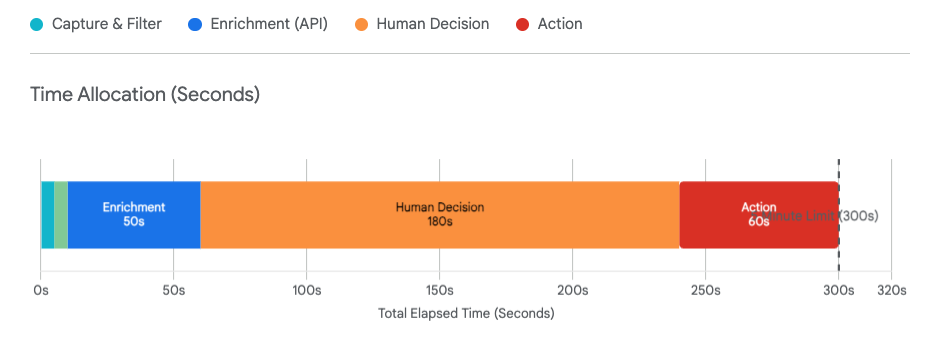
Can you convert anonymous website traffic into highly contextualized, outbound sales sequences within a strict five-minute window? And why five minutes? It is the race against "cognitive drift."
Data suggests that qualifying a lead drops by nearly 80% if the response exceeds this window. In the fragmented digital environment of 2026, where buyer attention is split across multiple agentic workflows and devices, this window has likely tightened further.
This report outlines a blueprint we are seeing deployed effectively in the field—a "Speed-to-Lead" architecture that balances extreme velocity with human-verified quality.
The Core Challenge: Latency vs. Context
The traditional approach—batch processing leads overnight—is obsolete. However, fully automating outreach is equally dangerous; AI hallucinations or misaligned context can burn brand equity instantly.
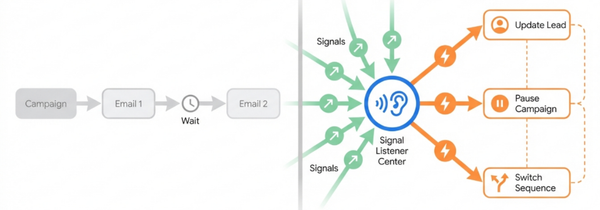
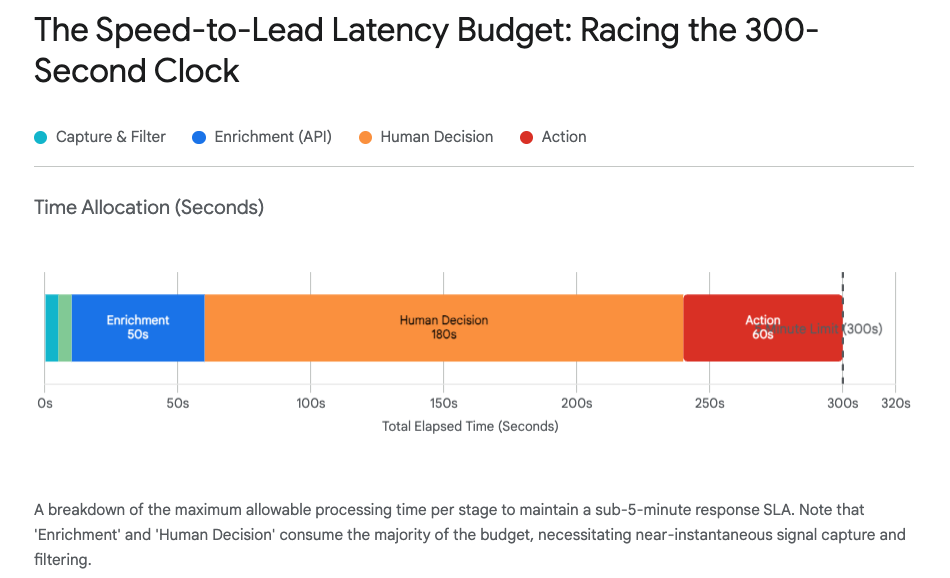
The solution is a Human-in-the-Loop architecture that operates in real-time. The goal is to ingest a signal, resolve identity, enrich the identity with more contextual information like the broader buying committee at that account, and present a decision to a human seller—all in under 300 seconds.
The Architecture: A Four-Stage Engine
We can break this down into four distinct layers that teams are using to solve this latency puzzle.
1. The Sensor Layer (Deanonymization)
The foundation is turning anonymous IPs into actionable identities. In 2026, we see a bifurcation in the market:
- Person-Level Identification (e.g., RB2B, Kwanzu): These tools leverage identity graphs to push specific LinkedIn profiles of visitors. This is the "gold standard" for speed because it tells you exactly who is browsing. Th
- Account-Level Identification (e.g., Apollo, Koala, Clearbit): These identify the company visiting. While broader, they lack the immediate "contactability" of person-level data. This is the old "first-party intent data" that was so meaningless - ("One of Amazon's 300,000 people stopped by!" Uhhh, who cares?)
Takeaway: We typically recommend a "waterfall" approach. Attempt to resolve the person first (high intent); if that fails, resolve the account and move to the Intelligence Layer.
2. The Intelligence Layer (Buying Committee Expansion)
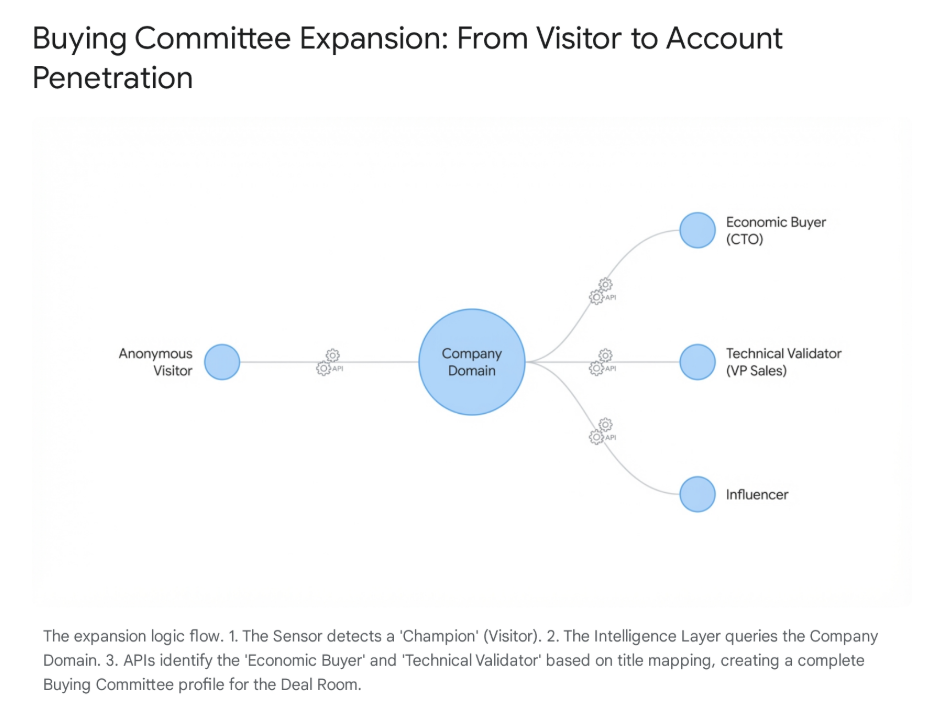
This is where the most sophisticated teams are generating results. The visitor to your site is often not the economic buyer.
- The Scenario: A Junior Developer visits your app documentation.
- The Legacy Mistake: Sales emails the Junior Developer. They have no budget; the lead goes cold.
- The Modern Play: The system identifies the Junior Developer’s company. It then uses enrichment APIs (like Apollo or Clay) to traverse the org chart and locate the CTO or VP of Engineering.
The system then flags the CTO as the target, using the Junior Developer’s visit as the context for the outreach. This turns a low-value signal into a high-value executive conversation.
3. The Decision Layer (Interactive lead card)
To move faster. we are seeing teams move their decision logic out of the CRM and into Slack, Google Chat, or Microsoft Teams.
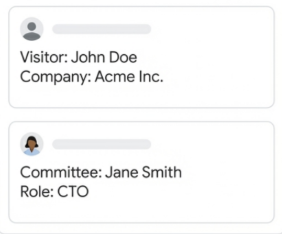
The automation bus (often orchestrated via n8n) sends a rich "Lead Card" to a dedicated chat/channel. This card summarizes:
- Who visited: (e.g., "Jane Doe, DevOps at Acme Corp")
- What they did: (Visited /pricing for 45 seconds)
- Who we should target: (The expanded list of decision-makers)
The Human Loop:
Option 1: The human simply clicks "Approve" or "Reject" directly in Slack. This eliminates the "swivel chair" friction of logging into the CRM, saving critical minutes.
Option 2: Alternately the human can just reach out immediately with all of that rich context and strike up a conversation or connect on LinkedIn (or both).
4. The Action Layer (Orchestration)
Once approved, the system instantaneously injects the prospect into a dynamic sequence set up in your n8n based marketing and sales engine (or sends it directly to your outbound component like Smartlead or Instantly.)
[Ideally the sequence is chosen based on context. A visit to the "Enterprise Pricing" page triggers a different sequence than a visit to "Technical Docs."]
Strategic Implications for the C-Suite
Quality Over Quantity (The Noise Filter)
A common pitfall is paying to enrich low-quality traffic. A robust architecture must include a "Negative Match Layer." We should effectively filter out ISPs (Comcast, Verizon), universities, and bot traffic before they ever hit our API credit limits.
Don't forget to screen for existing customers. There is nothing more embarrassing than a "cold" sales email to a client who just signed a renewal and was poking around your website. This architecture allows us to route those signals to Account Management instead of Sales.
Preparing for the coming-soon "Agentic Buyer"
Looking ahead to late 2026, we must anticipate the rise of "Buyer Agents"—AI systems acting on behalf of procurement teams to filter inbound solicitations. [Side-note - will RB2B still know what company that agent works for...?]
Our outbound strategy will soon need to pivot from purely persuasive prose to machine-readable offers (structured data, clear pricing APIs). An architecture built on structured data and orchestration today positions us to interact with these agentic protocols tomorrow.
Recommendation
This architecture—orchestrating RB2B (Signal), Apollo (Intelligence), and Slack/Teams (Decision)—represents the current state-of-the-art for revenue engineering.
It transforms "Speed-to-Lead" from a nagging operational request into a strategic asset. By removing manual data entry and focusing human effort solely on the decision to engage, we can reliably hit that 5-minute window while actually increasing the quality of our interactions.
Thanks for reading.
Troy