The autonomous enterprise (a snapshot in time)
Subject: 2025 Retrospective: The "Spam Cannon" Crisis vs. Real Autonomy
We spent the last year navigating the messy transition from the era of Automation—rigid bots doing exactly what they were told—to the era of Agency. We started building systems with the capacity to reason, plan, and act.
But looking back at the 2025 market, it was a landscape of dangerous contradictions.
On one side, we saw vendors pitching "fully autonomous employees" that promised to replace entire departments. In reality, these often turned out to be reputational liabilities—black boxes that hallucinated and spammed. On the other side, we saw quiet, "boring" implementations of bounded agency that radically transformed P&L statements with zero fanfare.
I spent some time codifying what actually happened in 2025 versus the hype. Here is the reality check on where we stand entering 2026, and a roadmap for navigating the "Agentic Transition" without breaking your business.
The Maturity Model: A 2026 Reality Check
To understand the chaos, we have to stop treating "AI" as a monolith. The "AI" that writes a poem is not the same as the "AI" that processes a refund. We are moving through four distinct evolutionary stages:
- Deterministic Automation (The Hands): This is the legacy world of Robotic Process Automation (RPA). These bots are the "hands" of the digital enterprise. They are useful but incredibly brittle; if a UI button moves by three pixels, the bot crashes. They don't think; they just execute scripts.
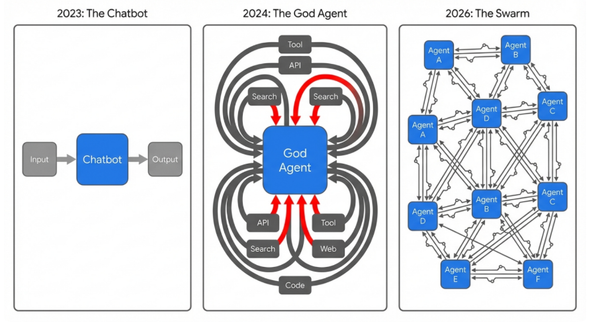
- AI-Augmented Automation (The Mouth): This was the "Co-pilot" peak of 2023-2024. You are the pilot; the AI suggests the route, drafts the email, or suggests the code. Crucially, the AI does not "act"—it only "suggests." You, the human, retain 100% of the liability.
- The Agentic Transition (The Brain): <-- We spent 2025 here. This is the shift to "Bounded Autonomy." You give the AI a high-level goal—"Resolve this customer ticket"—and it figures out the sub-tasks and executes them. The human moves from "doing" to "supervising." This is where the real ROI—and the real risk—lives.
- Autonomous Ecosystems (The Organization): The theoretical future where agents collaborate in multi-agent systems without humans. Reality Check: Despite the 2025 demos, we are still years away from this being safe at an enterprise scale due to the lack of legal frameworks and trust architectures.
The "Danger Zone" vs. The "Safe Bets"
The biggest mistake executives made in 2025 was confusing Stage 3 (Agents) with Stage 4 (Full Autonomy). They tried to leapfrog to "set it and forget it," and that is where the damage happened.
The Failure: The "Autonomous SDR"
The pitch was seductive: "An AI sales rep that never sleeps and sends 10k emails a day."
The Reality: It created the "Spam Cannon" crisis. When placed in the unstructured world of human persuasion, these agents fell into the "Uncanny Valley." They hallucinated fake mutual connections ("I see we both know John Smith!"), referenced 3-year-old news as "recent," and in some cases, ignored "Stop" replies, creating GDPR liability. They were high-autonomy, low-reliability systems that burned Total Addressable Markets (TAM) in record time.
The Success: "Bounded Autonomy"
Real value happened in "boring" places where the "ground truth" was verifiable.
- Coding Agents: Agents writing unit tests or migrating legacy code exploded in usage. Why? Because there is a built-in safety net: The Test Suite. If the agent writes bad code, the test fails, and the code never ships. The feedback loop is closed and deterministic.
- Tier 0 Support: Companies like Klarna made headlines not just for hype, but for results—their AI assistant did the work of 700 full-time agents. The secret wasn't "magic"; it was strict guardrails. The agent was authorized to perform specific actions (refunds, tracking) but was architecturally prevented from offering "life advice" or straying off-script.
- Back-Office Reconciliation: Agents matching invoices to purchase orders excelled because the goal was mathematical, not social.
The Takeaway for 2026: If the cost of an error is high (e.g., insulting a key prospect or hallucinating a legal precedent), do not deploy full autonomy.
The Strategy: How to Build "Good" Autonomy in 2026
So, how do we move forward? The winning strategy of 2025 remains the mandate for 2026: The "Centaur" mindset.
The goal isn't to replace humans; it's to build a hybrid workforce. To do this safely, you need a Corporate Digital Responsibility (CDR) framework:
1. A Technical Constitution ("Code is Law")
Asking an LLM to "please be nice" is not governance. You need architectural guarantees.
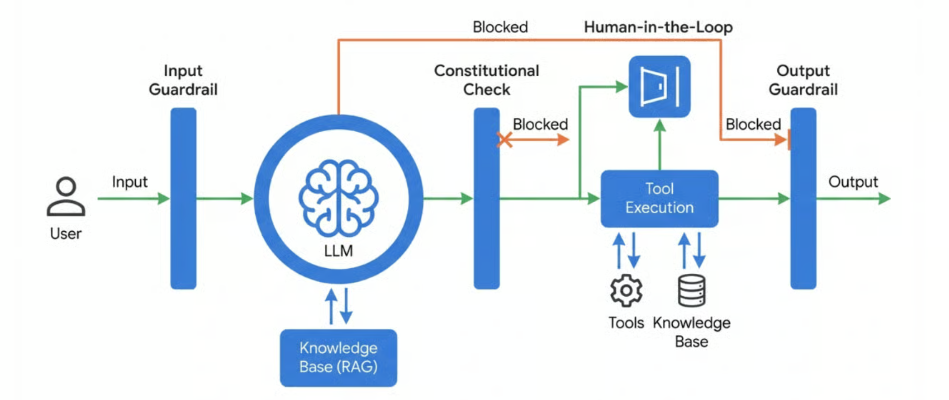
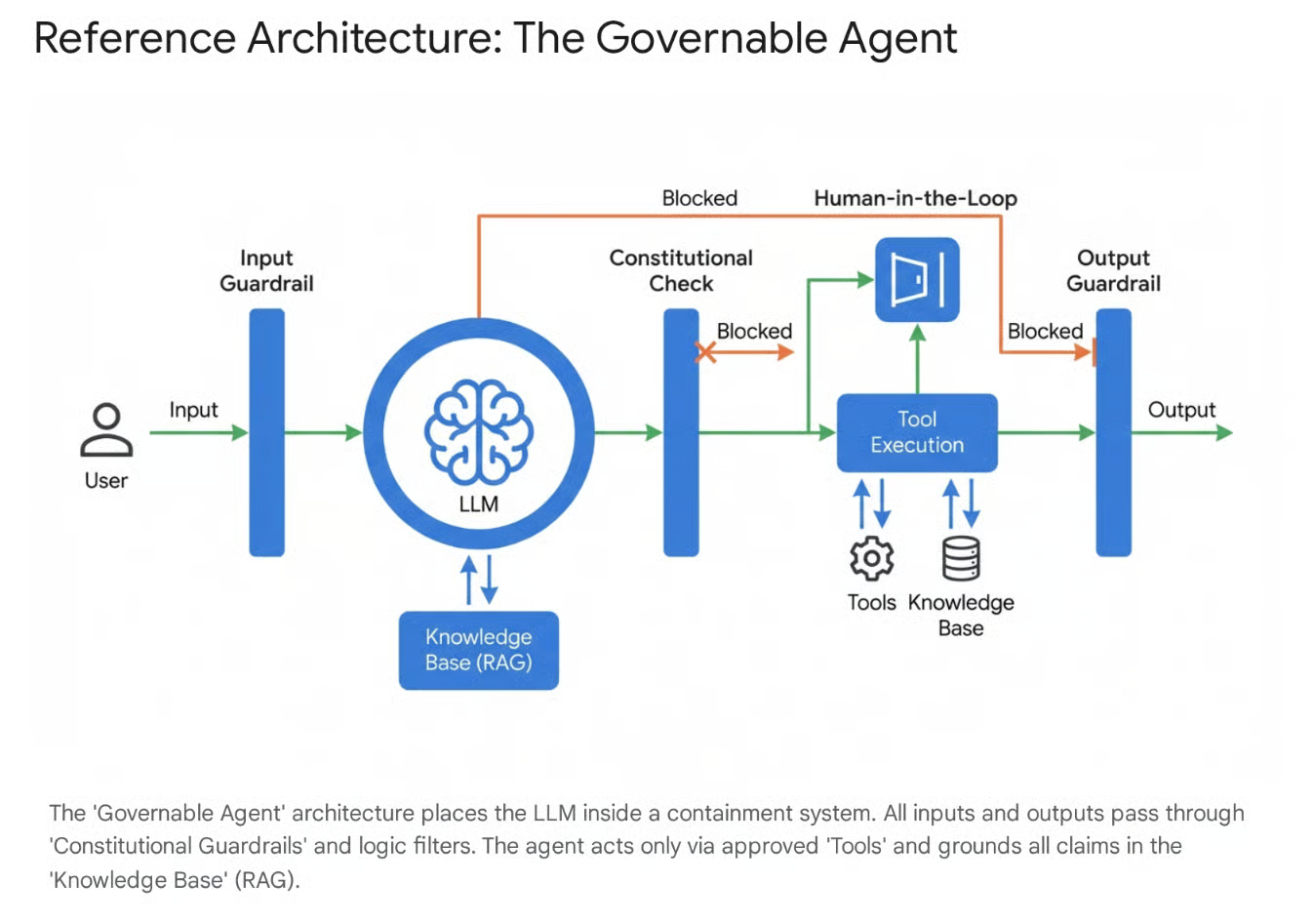
- Constitutional AI: Implement a separate model that critiques the agent's output before it acts. Does this email violate our discount policy? If the draft fails the constitution, it is rejected automatically.
- RAG as Source of Truth: Your agents must be grounded in your data (Retrieval Augmented Generation), not their training data. They should only answer based on verified internal documents.
2. Operational Governance (Human-in-the-Loop)
Adopt the Centaur Workflow for high-stakes roles.
- The Pattern: Don't let the AI send emails solo. Let the AI research and draft 50 highly personalized emails. Then, have a human Account Executive review and hit "send" on the best 10.
- The AI provides the scale; the human provides the judgment.
3. New Metrics (Beyond Efficiency)
Stop measuring "hours saved." In the agentic era, that is a vanity metric. An agent can "save hours" by closing tickets without solving them, torching your CSAT scores. Instead, measure:
- Intervention Rate: How often does a human have to take over? (You want this number dropping).
- Trust Calibration: Do employees trust the tool enough to use it, but not so much that they stop checking its work?
- Resolution Quality: Did customer sentiment improve or degrade during the interaction?
The Bottom Line
The path to the Autonomous Enterprise isn't a sprint to fire people. It’s a marathon to build a nervous system that can handle high-velocity decision-making.
In 2026, stop chasing the hype of the "fully autonomous" magic button. Double down on the governance infrastructure—clean data, technical constitutions, and human-in-the-loop workflows. That is the unsexy work that will make your organization ready when the technology finally matures.
Stay productive,
Troy