The end of linear drip and the rise of liquid signal-based campaigns
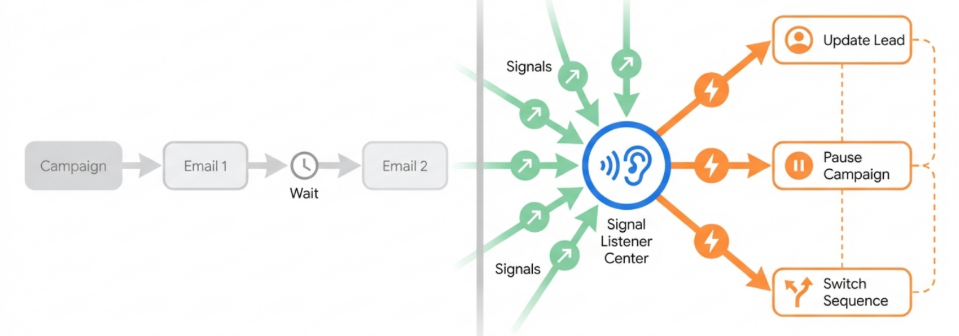
Two macro-forces have rendered the traditional "Linear Drip" model (Email 1 > Wait 2 Days > Email 2) obsolete:
- The Commoditization of Quality: Generative AI (ChatGPT 5.x, Claude 4.x) has made persuasive, grammatically perfect copywriting free and infinite. Inboxes are flooded with "good" emails. Content is no longer a differentiator; context is.
- The Cost of "Context Blindness": In a saturated market, "context blindness" is the primary driver of churn and reputation damage. Sending a generic "checking in" email to a prospect who just visited your pricing page (high intent) or announced a layoff (risk state) is not just a missed opportunity—it makes you look clueless.
The Strategic Imperative: The competitive advantage has shifted from writing to listening. The organizations winning today have stopped building "campaigns" (at least inside the mail sending infrastructure) and started building "Signal-Based Architectures." They do not compete on volume; they compete on hyper-relevance.
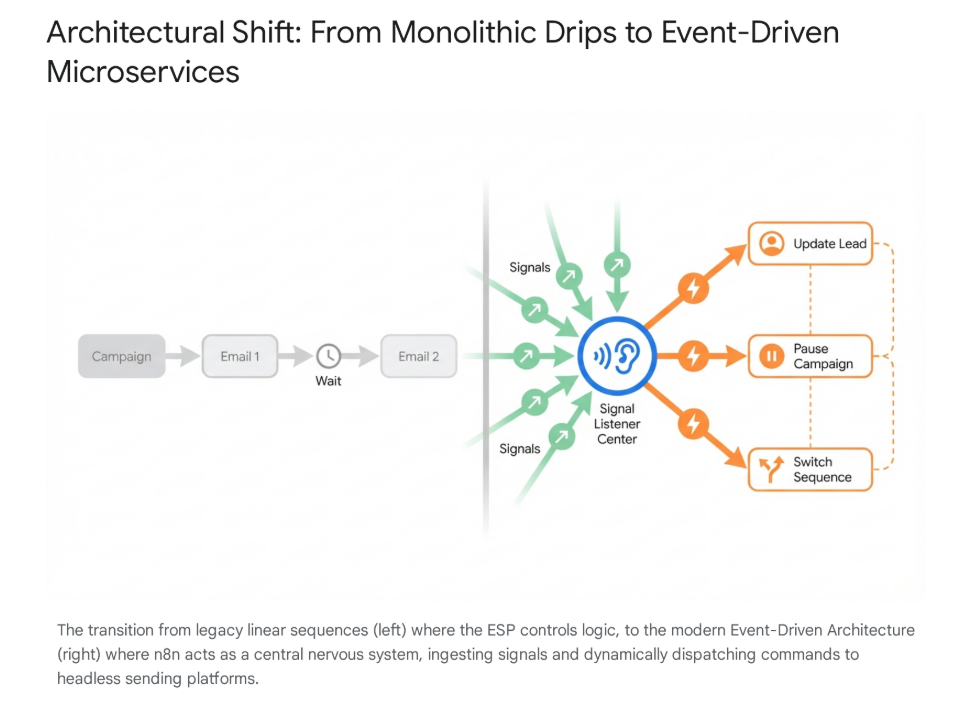
1. The Architectural Shift: Deconstructing the Monolith
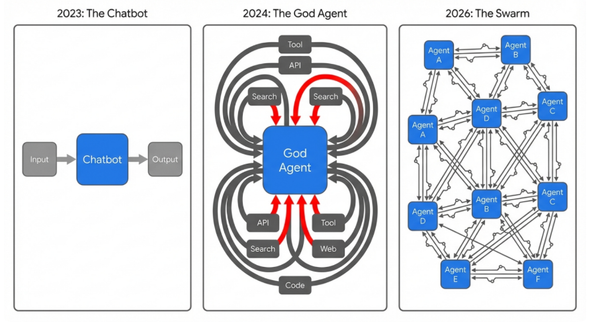
To execute this strategy, we must fundamentally re-architect our stack. The core thesis is that the email sending platform (Smartlead, Instantly, Salesforge) must be demoted in terms of its functions. It ceases to be the "brain" of the operation and becomes a "headless executor"—a reliable infrastructure layer for message delivery only.
The logic moves to an external orchestration layer, or "Signal Listener," built on n8n. This Listener does not send emails; it processes information. It inverts the flow of control: instead of the platform polling for leads, the Listener pushes context to the platform.
The Anatomy of the "Signal Listener" (The Brain)
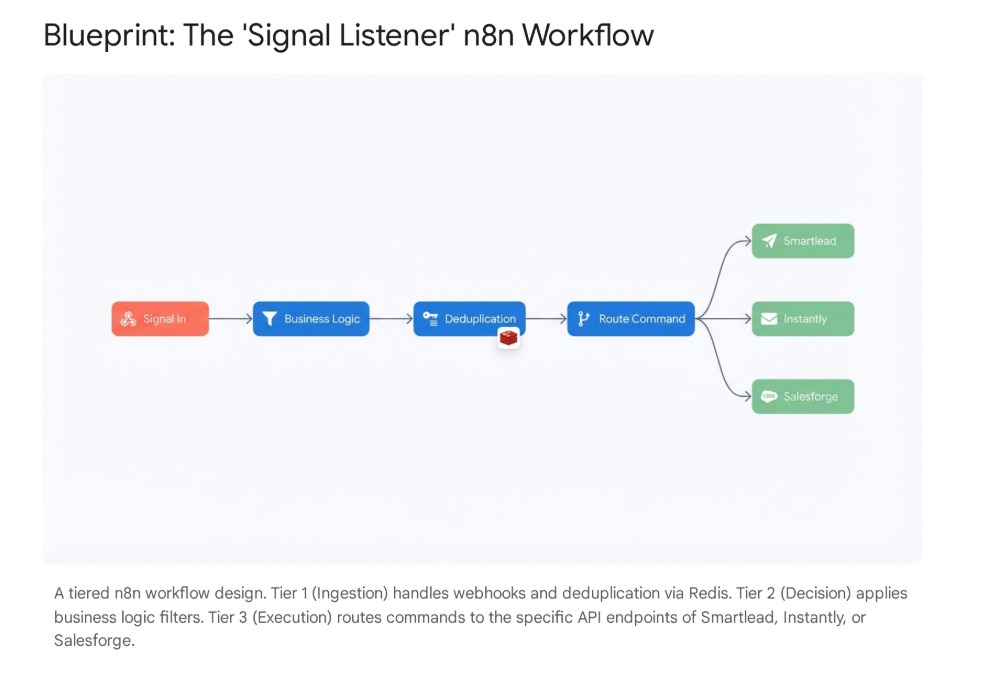
To avoid "Signal Thrashing"—where a lead triggers multiple conflicting updates simultaneously—the Signal Listener must be architected in three distinct tiers:
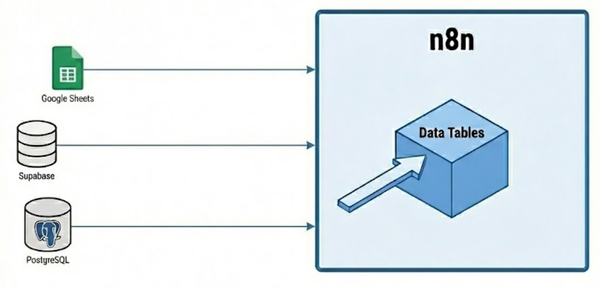
- Tier 1: Ingestion & Normalization: The Listener acts as an always-on ingestion engine for disparate data streams. It accepts webhooks from Intent signals (RB2B, 6sense), CRM state changes (Salesforce, HubSpot), and market events (funding news via Apollo/Clay). Crucially, it normalizes these wildly different payloads (e.g., flattening nested JSON from HubSpot) into a standard internal schema before processing.
- Tier 2: State Management & Deduplication: This is the memory of the operation. In high-volume setups, the Listener connects to a state database (like Redis or Supabase) to check the lead's status. It applies logic such as: "If this lead triggered an update less than 24 hours ago, ignore this new signal." This prevents API rate limits and ensures a lead visiting your pricing page five times in one hour doesn't trigger five separate workflows.
- Tier 3: The Router: Once a signal is validated, the Listener acts as a traffic controller. It routes the payload to the specific "Microservice" workflow designed for the active sending platform (Smartlead, Instantly, or Salesforge), executing a surgical strike on that specific lead's record.
2. Core Capabilities: The Three Microservices
By implementing this architecture, the organization unlocks three specific microservices that address the limitations of the linear drip and directly support the "Context First" strategy.
Microservice A: The "Pause & Pivot" Protocol
- The Strategic Value: TAM Protection & Attribution Integrity. Legacy systems often require deleting a lead to stop a sequence. This is catastrophic for data science as it destroys the activity history (opens, clicks). The "Pause & Pivot" microservice utilizes specific API endpoints to stop future steps while preserving the lead's data record.
- The Mechanics: When a signal is received (e.g., "Meeting Booked" or "Out of Office"), the Listener queries the platform to retrieve the specific lead_id and campaign_id. It then hits a dedicated Pause endpoint. If the signal is temporary (like an OOO reply saying "Back Monday"), the Listener can use a "Wait" node to hold the workflow and trigger a Resume endpoint on the exact date of return.
Microservice B: Dynamic Context Injection
- The Strategic Value: In-Flight Personalization. True dynamic campaigns change their content based on new information after the campaign has started. This transforms a static template into a timely notification.
- The Mechanics: If the Listener detects a new relevant data point (e.g., the prospect installed a competitor's SDK), it triggers a workflow to upsert this data into the lead's profile.
- Technical Nuance: The Listener must map this new data to the platform's specific schema. For example, updating the
custom_fieldsobject in Smartlead or thepayloadobject in Instantly. The next email in the sequence then dynamically renders this variable (e.g.,{{competitor_tech}}), ensuring the message is relevant to the current reality of the buyer, not the reality of last week.
- Technical Nuance: The Listener must map this new data to the platform's specific schema. For example, updating the
Microservice C: Infrastructure Circuit Breakers
- The Strategic Value: Resilience & Self-Healing. In a saturated market, deliverability is volatile. This microservice protects the organization from downtime without human intervention.
- The Mechanics:The Listener monitors engagement webhooks (specifically bounce events) from the sending platform. If a specific sender identity (mailbox) exceeds a defined bounce threshold in a set time window, the Listener executes a "Remove Email Account" command. This instantly pulls the "sick" mailbox from rotation across all campaigns. The campaign continues sending from remaining healthy mailboxes, effectively "healing" itself to protect domain reputation.
3. The Platform Landscape: Strategic Selection
For the executive team, the choice of platform depends largely on your operational maturity and volume requirements. Here is how the three market leaders align with different strategic needs.
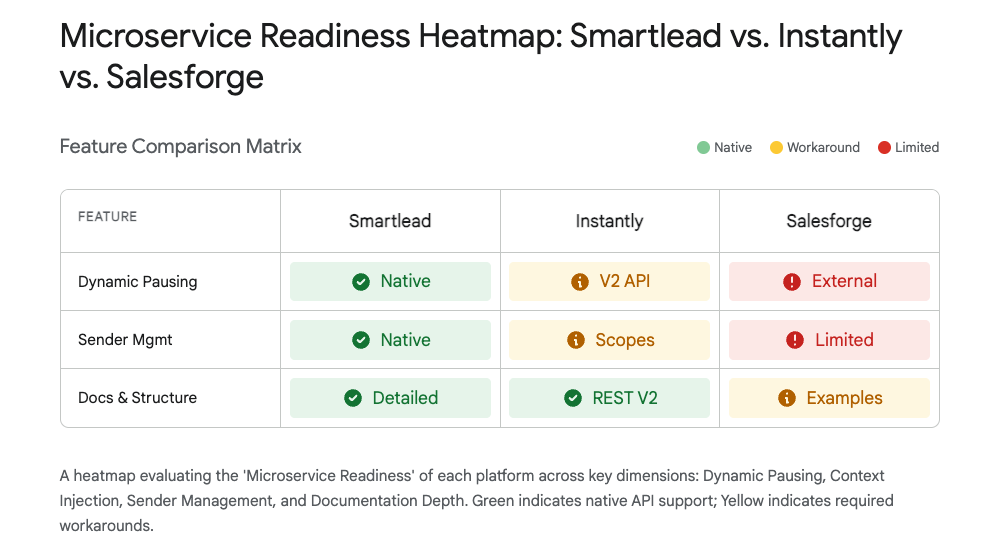
Smartlead: The "Industrial Strength" Option
- Best For: Enterprise teams and high-volume orchestration.
- The "Why": Smartlead acts like a fully programmable infrastructure layer. It offers the most granular control, allowing us to swap sender accounts and pause specific leads with surgical precision. It is the "power user" choice for teams who want to build complex, self-healing systems.
- Trade-off: Requires a more mature technical setup to manage correctly.
Instantly.ai (v2): The "Structured" Option
- Best For: Mid-market teams needing stability and structure.
- The "Why": Instantly is a robust, modern platform that excels at "Subsequences"—the ability to easily move leads from a general track to a specific track (e.g., "High Intent"). It enforces strict data quality rules, which keeps your CRM clean but requires discipline.
- Trade-off: Less flexible with "messy" data; requires strict data hygiene.
Salesforge: The "AI-Native" Option
- Best For: Global teams and lean organizations.
- The "Why": Salesforge shines for teams that want AI capabilities out of the box without deep engineering. Its standout feature is AI-driven multi-language sending, which automatically matches the email language to the prospect's country. It integrates easily with existing tools, reducing the need for custom code.
- Trade-off: Offers less "under the hood" control for custom engineers compared to Smartlead.
4. Strategic Conclusion
The "Linear Drip" was an artifact of a time when inbox placement was easy and attention was cheap. That era is gone.
Adopting a microservice architecture is the only way to align with the new reality of 2026. By decoupling signal processing (The Brain) from message delivery (The Hands), the organization achieves:
- Reduced Burnout: We stop annoying high-value prospects who have already converted or disqualified themselves.
- Hyper-Relevance: We inject real-time market news into emails milliseconds before they send.
- Resilience: We build infrastructure that heals itself when individual nodes fail.
Is your team building for volume (Linear) or for relevance (Signal-Based)?
Troy